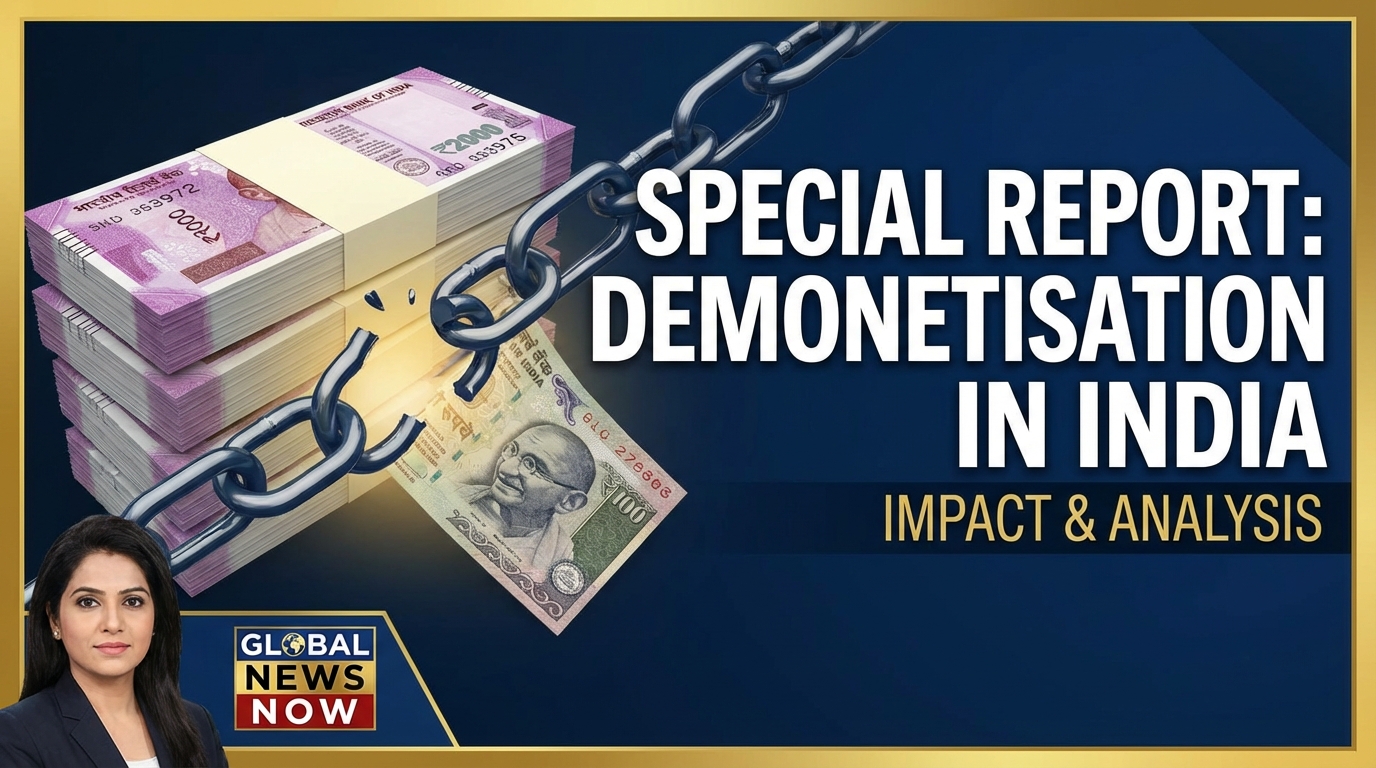
demonetisation in india
**A Decade of Disruption: Demonetisation in India and the Economic Landscape in 2026** Nearly a decade after India’s historic and unprecedented economic experiment, the legacy of demonetisation continues to shape the country’s financial landscape. Announced on November 8, 2016, the sudden invalidation of ₹500 and ₹1,000 banknotes—which constituted 86% of the total currency in circulation at the time—was aimed at curbing black money, combatting counterfeit currency, and catapulting India toward a digital economy. As of early 2026, the Indian economy exhibits a fascinating duality: an explosive, record-breaking surge in digital payments, existing alongside an all-time high in physical cash circulation. Here is a detailed look at the latest updates, facts, and the enduring impact of demonetisation in India. ### The Phasing Out of the ₹2,000 Note In May 2023, the Reserve Bank of India (RBI) announced the withdrawal of the ₹2,000 denomination banknotes, an exercise many dubbed a "mini-demonetisation." Unlike the 2016 shock, this was a gradual phase-out, and the notes continue to remain legal tender. The ₹2,000 notes were originally introduced in 2016 as a stopgap measure to quickly remonetise the economy. **Latest 2026 Facts on ₹2,000 Notes:** * According to the RBI's update in February 2026, a staggering **98.42%** of the ₹2,000 banknotes have been successfully returned to the banking system. * The total value of these notes in circulation plummeted from ₹3.56 lakh crore on the day of the announcement (May 19, 2023) to just **₹5,609 crore by January 31, 2026**. * The RBI’s 19 regional issue offices continue to accept these notes for deposit into bank accounts, and citizens can also send them via India Post. ### The Digital Revolution: UPI's Record-Breaking Run If demonetisation had one undeniable long-term success, it was serving as the catalyst for India's digital payment ecosystem. The Unified Payments Interface (UPI), developed by the National Payments Corporation of India (NPCI), has evolved into a global benchmark for instant payments. **Latest 2026 Facts on UPI:** * **Annual Records:** In 2025, UPI processed a monumental **228 billion transactions** with a cumulative value of **₹300 trillion**, a 33% volume growth compared to 2024. * **Monthly Highs:** December 2025 marked the highest monthly volume to date, clocking **21.63 billion transactions** worth nearly ₹28 lakh crore. On average, the system processed nearly 698 million transactions per day. * **Global Expansion:** As of early 2026, UPI is fully functional in several other nations, including the UAE, Singapore, France, Mauritius, and Sri Lanka. The International Monetary Fund (IMF) now recognizes India's UPI as the world’s largest retail fast-payment system by volume, handling over 50% of the world's digital transaction volume. ### The Paradox of Cash: Currency in Circulation Hits ₹40 Lakh Crore Despite the massive digital push, India’s appetite for physical cash remains robust. In what appears to be a paradox, the Currency in Circulation (CiC) reached a historic high of **₹40 lakh crore** by the end of January 2026. However, economists point out that the context has changed: * **Declining Cash-to-GDP Ratio:** While the absolute amount of cash has grown (up 11.1% year-on-year in January 2026), the cash-to-gross domestic product (GDP) ratio has steadily declined. It dropped from a pandemic peak of 14.4% in 2021 to around **11.1% in FY2026**. This indicates that incremental economic growth is being financed less by physical cash and more by digital transactions. * **Shift to Smaller Denominations:** Following the withdrawal of the ₹2,000 note, the RBI has focused on maintaining liquidity through smaller denominations. Currently, the ₹500 note accounts for roughly 86% of the total value of banknotes in circulation. * **The "Clean Note Policy":** To ensure convenience, the RBI directed banks to calibrate 96% of their ATMs to dispense ₹100 and ₹200 notes by the end of March 2026. Because it takes a higher volume of paper to represent the same financial value, the physical pieces of currency in circulation have naturally bloated. Experts at the State Bank of India (SBI) Research note that the Indian economy is operating on a "dual-track," where cash and digital payments coexist to fuel a rapidly expanding consumer market rather than cannibalizing each other. ### Combating Rumours and Misinformation Given the traumatic memory of overnight currency bans, rumors regarding notes frequently circulate on social media. The government and the RBI have actively had to debunk several fake claims in 2025 and 2026: * **No Return Window for 2016 Notes:** Viral claims suggesting the RBI had reopened a "final opportunity" window in 2026 to exchange the old 2016-era ₹500 and ₹1,000 notes are entirely false. The RBI has reiterated that those exchange windows are permanently closed. An estimated ₹10,700 crore worth of the 2016 demonetised notes remain unreturned and are completely invalid. * **No Ban on Current ₹500 Notes:** A recurring social media hoax claimed that the current ₹500 notes would be demonetized or removed from ATMs by March 2026. The Press Information Bureau (PIB) and the Ministry of Finance have categorically denied these claims, assuring citizens that ₹500 notes remain fully legal tender with no plans for discontinuation. ### Conclusion As of 2026, the ripple effects of India's demonetisation have settled into structural economic changes. While the initial move in 2016 caused severe short-term disruptions, the long-term legacy has birthed an incredibly resilient digital financial infrastructure. India has achieved an equilibrium where a ₹5 roadside tea can be bought instantly via a smartphone QR code, even as cash circulation hits ₹40 lakh crore. The cash is no longer strictly competing with digital transactions; rather, both are expanding simultaneously to accommodate the needs of one of the world's fastest-growing major economies.
The agreement, while not legally binding, represents the strongest signal yet that major economies are prepared to pivot toward renewables. Environmental groups welcomed the pledge but urged faster implementation.
Negotiations nearly collapsed late Wednesday due to disputes over financing for developing nations. A last‑minute compromise established a working group on green technology transfer, which will convene for the first time in June.
Observers note that the real test will be national policies. "We have seen ambitious declarations before," said Maria Fernanda, lead analyst at the climate policy institute. "What matters now is follow‑through."