What is Data? A Comprehensive Guide with Latest Insights (2024)
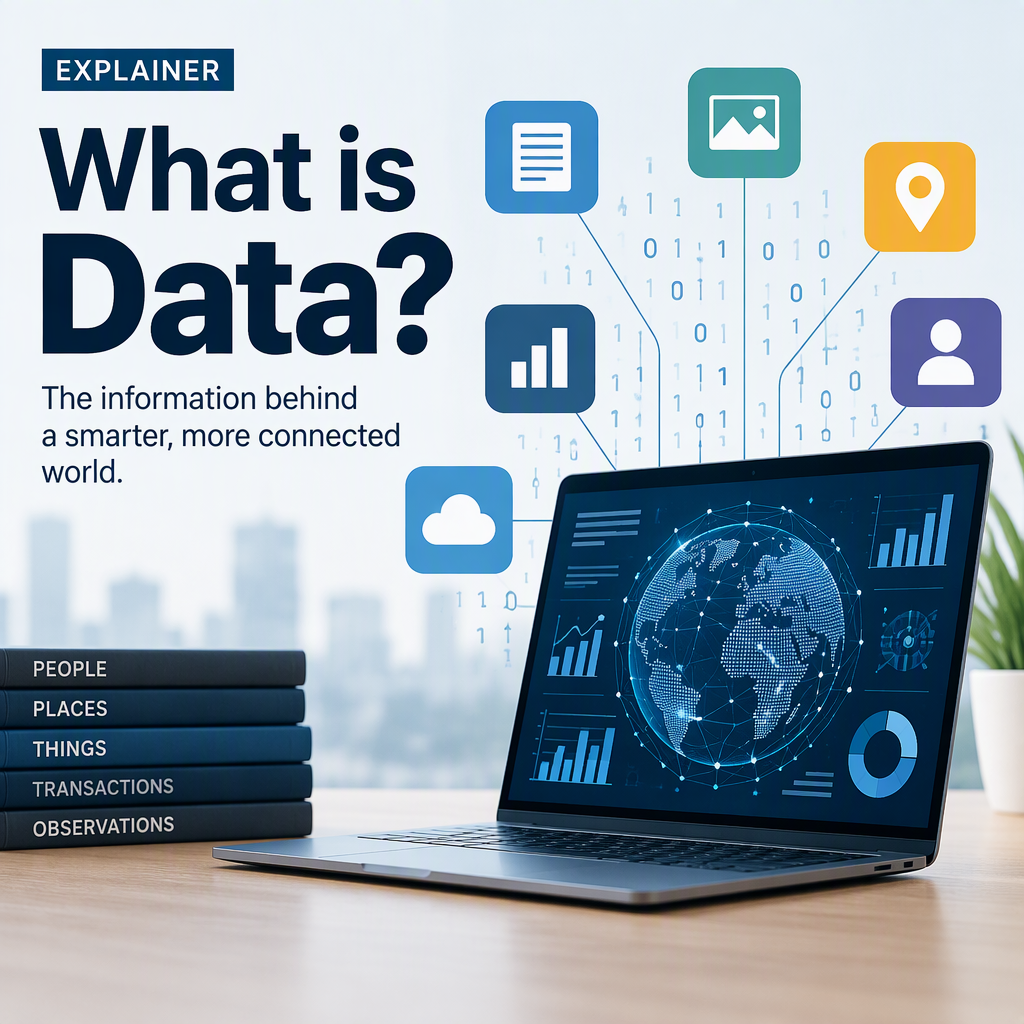
**What is Data? A Comprehensive Guide with Latest Insights (2024)** Data is one of the most fundamental concepts in the digital age, shaping industries, research, and our everyday lives. But what exactly is data, and why does it matter so much today? This article dives deep into the definition of data, its types, modern trends, and the latest facts you need to know in 2024. --- ### What is Data? At its core, **data** refers to raw facts, figures, or symbols that represent information about objects, events, or concepts. Data can be numbers, words, measurements, observations, or even just descriptions of things. **Example:** - The number “25,” the word “blue,” or the statement “Monday was rainy” are all data. However, data by itself is not always useful. It becomes meaningful when processed, organized, or analyzed—transforming into **information**. --- ### Types of Data Data can be classified in several ways: #### 1. **Structured Data** - **Definition:** Data that is organized in a fixed schema, typically found in spreadsheets or databases (e.g., SQL). - **Examples:** Customer names, phone numbers, transaction records. #### 2. **Unstructured Data** - **Definition:** Data without a pre-defined format, making it harder to collect, process, and analyze. - **Examples:** Emails, social media posts, videos, images, audio files. #### 3. **Semi-Structured Data** - **Definition:** Data that does not reside in a relational database but still has some organizational properties, like tags or markers. - **Examples:** XML files, JSON documents. #### 4. **Qualitative vs. Quantitative Data** - **Qualitative:** Descriptive (colors, labels, opinions). - **Quantitative:** Numerical (height, age, salary). --- ### The Importance of Data Today #### **Digital Transformation** Data is the lifeblood of digital transformation, enabling organizations to make informed decisions, improve efficiency, and innovate. In 2024, businesses that leverage data effectively are significantly outperforming those that do not. #### **AI and Machine Learning** Modern AI models require vast amounts of data for training and validation. The more accurate and diverse the data, the better AI can perform tasks ranging from language translation to autonomous driving. #### **Personalization & Customer Experience** Data allows companies to tailor products and services to individual preferences, enhancing customer satisfaction and loyalty. #### **Healthcare and Science** From tracking disease outbreaks to developing personalized medicine, data is revolutionizing healthcare and scientific research. --- ### Latest Updates and Facts (2024) #### 1. **Explosion of Data Volumes** - According to IDC’s latest report, the global datasphere is expected to reach **175 zettabytes by 2025**, up from 120 zettabytes in 2023. - Over **80% of data generated today is unstructured**, highlighting the need for advanced analytics and storage solutions. #### 2. **Data Privacy and Regulation** - In 2024, new regulations like the **EU’s Data Act** (effective January 2024) and updated **US state privacy laws** are reshaping how organizations collect, store, and share data. - **Data sovereignty**—keeping data within national borders—is a growing trend, impacting cloud strategies globally. #### 3. **Real-Time Data Processing** - Real-time analytics are now mainstream, with sectors like finance, e-commerce, and logistics relying on instant insights from streaming data. - Technologies like **edge computing** are enabling data processing closer to the source, reducing latency and bandwidth costs. #### 4. **Data Democratization** - More organizations are investing in **self-service data platforms** that allow employees across all departments to access and analyze data without specialized IT support. #### 5. **Synthetic Data** - With privacy concerns on the rise, **synthetic data**—artificially generated data that mimics real-world data—is becoming popular for machine learning and testing. --- ### Challenges in Data Management - **Data Quality:** Inaccurate or incomplete data can lead to faulty conclusions. - **Security & Privacy:** Protecting sensitive data from breaches and misuse remains a top priority. - **Data Silos:** Fragmented data across departments or platforms limits its value. --- ### The Future of Data By 2030, experts predict that data will become even more integral to everyday life, with advances in quantum computing, IoT (Internet of Things), and next-generation AI further amplifying its role. **Key Takeaway:** Data is more than just numbers and text—it's the foundation of modern innovation. Understanding and harnessing data responsibly is essential for individuals, businesses, and society at large. --- **References:** - IDC Data Age 2025 Report - European Data Protection Board (EDPB) Guidelines, 2024 - Gartner, “Top Data and Analytics Trends 2024” - World Economic Forum, “The State of Data 2024” --- **In Summary:** Data is the raw material of the information age, powering everything from business strategy to scientific discovery. With data volumes and complexity growing rapidly, staying informed about the latest trends and challenges is crucial for navigating our data-driven future.
The agreement, while not legally binding, represents the strongest signal yet that major economies are prepared to pivot toward renewables. Environmental groups welcomed the pledge but urged faster implementation.
Negotiations nearly collapsed late Wednesday due to disputes over financing for developing nations. A last‑minute compromise established a working group on green technology transfer, which will convene for the first time in June.
Observers note that the real test will be national policies. "We have seen ambitious declarations before," said Maria Fernanda, lead analyst at the climate policy institute. "What matters now is follow‑through."